

Land Share in a Turkish Apartment: What Buyers Should Check
Contents
Land share at a glance
Buyers often focus on floor area, floor level, orientation, views and price. The land share recorded in the title (guide in Turkish) also deserves attention, particularly in Kadıköy, around Bağdat Avenue and in Suadiye, Erenköy and Caddebostan.
The land share is the fraction of common ownership in the underlying parcel attached to an independent unit. When you buy an apartment, that registered share forms part of what you acquire.
Review it alongside the title, encumbrances, ownership category and occupancy permit, and zoning conditions. It can affect redevelopment, valuation, some expenses and decisions, and the rights attached to the property.
What buyers should know about land shares
The land share is an independent unit’s fraction of common ownership in the parcel. Check it before buying, particularly when assessing title, value or a potential redevelopment.
What does it mean?
It is the registered share of the underlying land attached to an independent unit, linking the apartment to rights in the parcel.
Where is it recorded?
Look for it in the land registry record and the documents establishing condominium ownership or construction servitude.
Why does it matter?
It can matter for redevelopment, common ownership, valuation and some owner decisions.
What should a buyer check?
Check whether the original allocation reflected the unit’s relative value when the ownership or servitude was established, taking account of position and size.
Why check it in Kadıköy?
For an older building, the share can influence the purchase assessment and the owner’s position in redevelopment negotiations.
What is the land share?
In a building registered under condominium ownership or construction servitude, each apartment, shop or office has an allocated fraction of ownership in the underlying parcel.
A larger, better-positioned apartment and a smaller rear-facing unit may have different shares. Allocation is based on their relative values when the right was established, taking account of position and size. A later change in market value does not automatically change the share.
Why does the land share matter?
This fraction in the register can have practical consequences for a buyer.
It can be relevant to:
Rights in a replacement development
The registered land share may be important when assessing an owner’s position in a proposal to demolish and rebuild.
Ownership of common parts
Owners hold common parts under the applicable common ownership rules in proportion to their land shares. Check any separate use rights.
Shares in owner decisions
Some decisions depend on land shares as well as the number of owners. An incorrectly allocated share can therefore affect a decision.
Property valuation
Consider the share together with location, size, orientation and condition during a valuation.
Demolition and rebuilding
In a redevelopment, the share can affect discussions about the owner’s position and allocation in the replacement building.
The land component of value
Where the value of land is significant, the registered share can help explain the property’s investment characteristics.
Sale negotiations
A clear, properly documented allocation can help buyers understand the property and assess the price.
Article 42 of Türkiye’s Condominium Law uses majorities by both owner numbers and land shares for certain improvements to common areas. Check which rule applies to the particular decision.
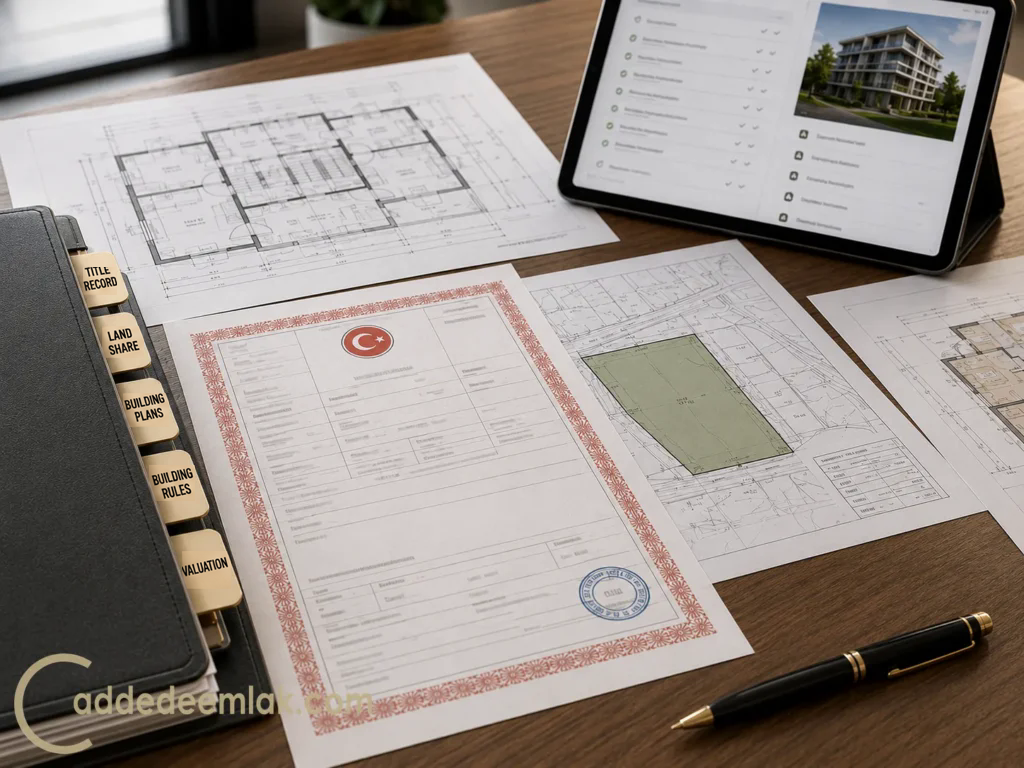
Why check it in a redevelopment?
When considering an older apartment around Kadıköy or Bağdat Avenue, review the share alongside any redevelopment proposal (guide in Turkish).
Allocation in a replacement building can depend on land shares, existing unit characteristics, zoning conditions and the agreed contractual model.
Two apartments may look similar yet have different registered shares. That difference can affect the owners’ negotiating positions and expectations in a redevelopment.
For an older apartment in Göztepe, Erenköy, Suadiye, Caddebostan or Feneryolu, include the share in your due diligence.
Should the share reflect the unit's value?
Under the statutory allocation rule, the share should reflect the independent unit’s relative value, based on its position and size when the right was established.
An owner or construction-servitude holder may seek judicial correction of an allocation that was not proportional under that rule. Obtain advice on the evidence and procedure for the case. Official land registry guidance.
Check the allocation and its underlying records when reviewing the title. Assess any suspected error on the legally relevant basis.
Is a smaller share always a problem?
A lower share can be consistent with a smaller or less valuable unit at the time the shares were established.
If the original allocation appears too low for the unit’s relative value, investigate the implications before purchasing, particularly if redevelopment is being considered.
Ask these questions:
Does the original allocation fit the unit?
Is the recorded share consistent with the unit’s size and relative value at the legally relevant time?
How do shares of comparable units differ?
Compare the allocations for similar units in the same building, including floor, orientation and size.
Were position and other value factors reflected?
Consider how the unit’s position, floor, frontage and other value-related features were reflected in the original allocation.
How would it affect a redevelopment proposal?
Have a proposed redevelopment assessed to understand how the existing share could affect allocation, contributions and negotiations.
Do the title, project and building rules agree?
Compare the register, approved project, unit identification and management plan for inconsistencies.
Land shares around Kadıköy and Bağdat Avenue
Around Kadıköy and Bağdat Avenue, the parcel and any documented redevelopment options can contribute substantially to the assessment of an apartment.
An older unit with a larger land share and a newer unit with a smaller share may offer different choices. Compare structural condition, rental prospects, costs and the buyer’s intended use.
How to check the land share before buying
Before buying, make these checks:
Review the registered land share
Identify the fraction allocated to the unit in the register and the total it refers to.
Check the ownership category
Check whether the unit is registered under condominium ownership or construction servitude. Review occupancy approval and project compliance separately.
Match the unit to the approved project
Match the registered unit to the approved project by location, number, use and area.
Compare allocations within the building
Compare shares for similar units and ask about any substantial differences.
Review zoning and redevelopment documents
Review the parcel’s current planning conditions, development capacity and any documented redevelopment proposal together with the share.
Obtain advice for the particular property
Ask a qualified valuer, lawyer or property adviser to explain the implications of the records for your purchase.

Include the land share in your purchase checks
The registered land share is an important part of the title file. Around Kadıköy, Bağdat Avenue, Suadiye, Caddebostan and Erenköy, review it for common ownership, valuation and any proposed redevelopment.
Caddede Emlak recommends checking title, encumbrances, occupancy, zoning and land share alongside the visible features. Property-specific advice can help identify issues before you commit.
Note: This article provides general information. For land share, title, condominium rights or redevelopment, consult the relevant registry, municipality or a qualified lawyer, valuer or adviser.
Frequently asked questions :
What is a land share?
It is an independent unit’s fraction of common ownership in the underlying parcel of an apartment building or development.
Is the land share recorded on the title?
Yes. The land registry records it for units registered under condominium ownership or construction servitude.
Is a unit with a larger share always more valuable?
Compare the whole property. A properly allocated share can matter for redevelopment and land value, alongside the condition, rights and price.
What can be done about an incorrect allocation?
Have the original allocation assessed on the legally relevant basis. An owner or construction-servitude holder may seek judicial correction where the statutory conditions are met.
In the heart of Bağdat Avenue, Join us for a coffee
We would be pleased to welcome you to our Suadiye office to discuss your property sale, purchase or valuation goals in person.