
Türkiye’s Urban Renewal Process in 2026: Owners and Tenants
Urban renewal under Law No. 6306 can start with a building risk assessment and proceed through objections, vacating, demolition, owners’ decisions and rebuilding. In earthquake-prone areas, renewal matters for safety, living conditions and property value.
In 2026, owners, tenants and investors need to follow the risk report, aid options, voting rules, share sales and contractor agreement.
This guide covers each stage, the rights of owners and tenants and the implications for Kadıköy and Bağdat Avenue.
How does urban renewal work in 2026?
The legal and technical process runs from risk assessment through objections, clearance and rebuilding.
How does it start?
Apply to a licensed assessment organisation.
Who can apply?
An owner or legal representative can apply.
Objection period
Owners have 15 days from legal notice to object to the assessment.
Demolition
Once the finding is final, the authorities give a deadline to vacate and demolish.
Voting threshold
Relevant redevelopment decisions require an absolute majority of ownership shares.
Public support
Eligible applicants may qualify for rent assistance, interest support or exemptions.
Tenant rights
Eligible tenants may apply for one-off relocation support.
Additional support in Istanbul
Eligible buildings in Istanbul may qualify for Yarısı Bizden.
Contents
What is urban renewal?
Urban renewal aims to replace obsolete or earthquake-vulnerable buildings with safer structures that meet applicable standards.
Türkiye’s principal framework is Law No. 6306 on the Transformation of Areas at Disaster Risk. It distinguishes risky buildings, designated risk areas and reserve development areas.
The process includes technical reports, owner decisions, vacating, demolition, planning, permits, contractor selection, financing and handover.

Why does urban renewal matter?
The AFAD earthquake hazard map shows why structural safety matters in Türkiye. Renewing older buildings can improve safety in dense cities such as Istanbul.
Renewal matters in three ways.
- Earthquake safety and compliance with applicable building standards
- Better insulation, lifts, parking and shared spaces
- Potential demand for safer, more usable buildings
In Kadıköy, Bağdat Avenue, Caddebostan, Suadiye, Erenköy and Göztepe, renewal can affect rents, housing prices and the appeal of commercial premises.
Rules and procedures in 2026
The 4 February 2026 Official Gazette, issue 33158, published amendments to the implementing regulation for Law No. 6306.
The amendments concern decisions, meetings, notices and the sale of dissenting owners’ shares.
Owners should plan for the following steps.
- Review the building risk report
- Track the objection deadline
- Follow the owners’ voting procedure
- Notify dissenting owners
- Follow the statutory share-sale procedure
- Prepare a detailed contractor agreement
- Compare rent assistance and financing
Urban renewal step by step
The stages below follow a typical project from risk assessment to handover.
Building risk assessment
Request an assessment from a licensed body.
Notice of the report
The authority reviews the report and, when approved, notifies the registry to record the finding.
Objection
Owners can object within the statutory period following notice.
Final determination
If there is no objection or it is rejected, the risk finding becomes final.
Vacating and demolition
The authority issues a deadline for vacating and demolition.
Owners’ decision
Relevant decisions can be adopted by an absolute majority of shares.
Contractor selection and agreement
Agree on the contractor, specifications, delivery date, delay penalties and guarantees.
Permits, construction and handover
Construction follows design and permits. The new units are then handed over.
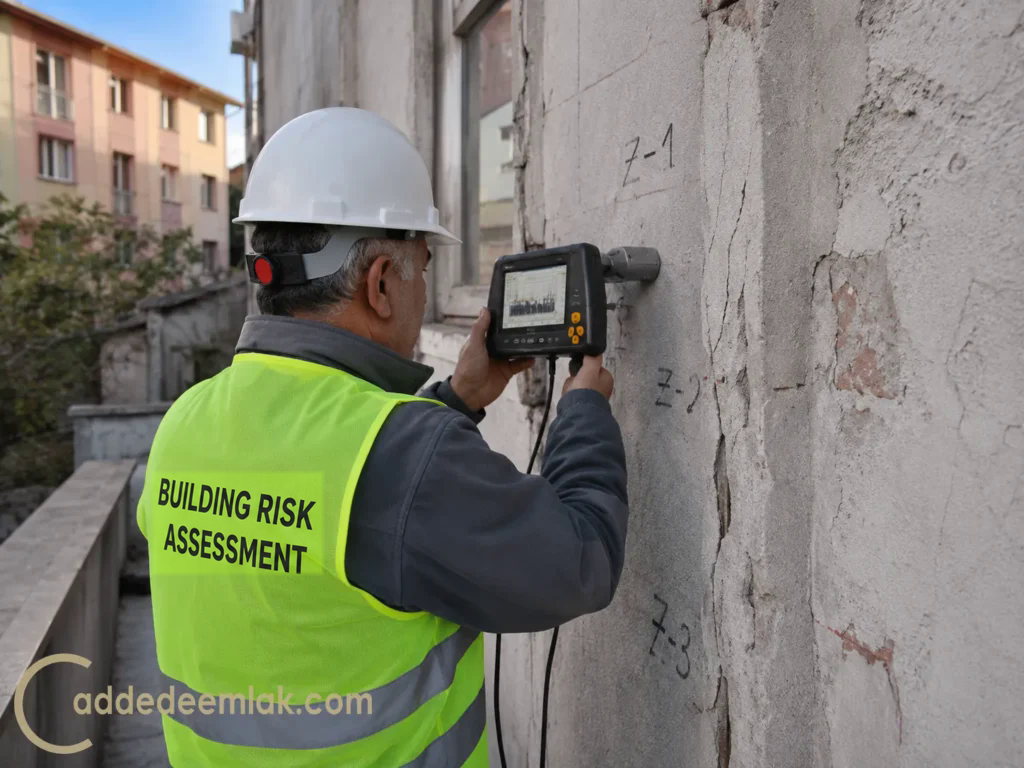
How is a building assessed?
For the formal building risk assessment, contact an organisation licensed by the competent authority.
An application from one owner or their legal representative is sufficient. The assessment may include core samples, concrete strength, reinforcement checks and structural analysis.
The competent authority reviews the report and notifies the land registry if the finding meets the requirements.
How to object to the risk report
Owners have 15 days from legal notice to object to a risk finding.
A technical panel reviews the objection. If it succeeds, the finding may be withdrawn or reconsidered. If it fails, the finding remains in effect.
Check the notice and deadline immediately. Once the period expires, the owners’ options may narrow.

How do vacating and demolition work?
Once the assessment is final, follow the deadline in the authority’s notice for vacating and demolition.
If the owners miss the deadline, the authority may proceed with enforcement, including utility disconnection, evacuation and administrative demolition as permitted.
Once the decision is final, plan the move, assistance application, contractor discussions and legal review together.
What is the absolute majority rule?
Under Law No. 6306, relevant decisions can be adopted by an absolute majority of ownership shares. The older framework commonly used a two-thirds threshold.
“50% plus one” is shorthand for more than half of the shares.
The threshold is calculated by ownership shares.
Six signatures out of ten may be insufficient if they represent half or less of the total shares.
The procedure may cover redevelopment, contractor selection, terms and share sales. Check the title, rules and agreement for each case.
Sale of dissenting owners’ shares
Owners who did not agree must receive the decision and proposal and have an opportunity to accept.
Official guidance describes a 15-day acceptance period after legal notice. The method may be electronic, notarial or through a local notice.
A dissenting share may enter the statutory sale procedure. Monitor e-Devlet, notarial notices and local postings.
What can owners claim?
Owners may qualify for support subject to documentation, deadlines and eligibility.
These issues are particularly relevant to owners.
- Rent assistance
- Interest subsidies
- Tax and fee exemptions
- Support after vacating
- Entitlement to a unit in the new project
- Security under the contractor agreement
- Specifications and handover terms
Check whether the building falls under Law No. 6306, then confirm deadlines and required documents.
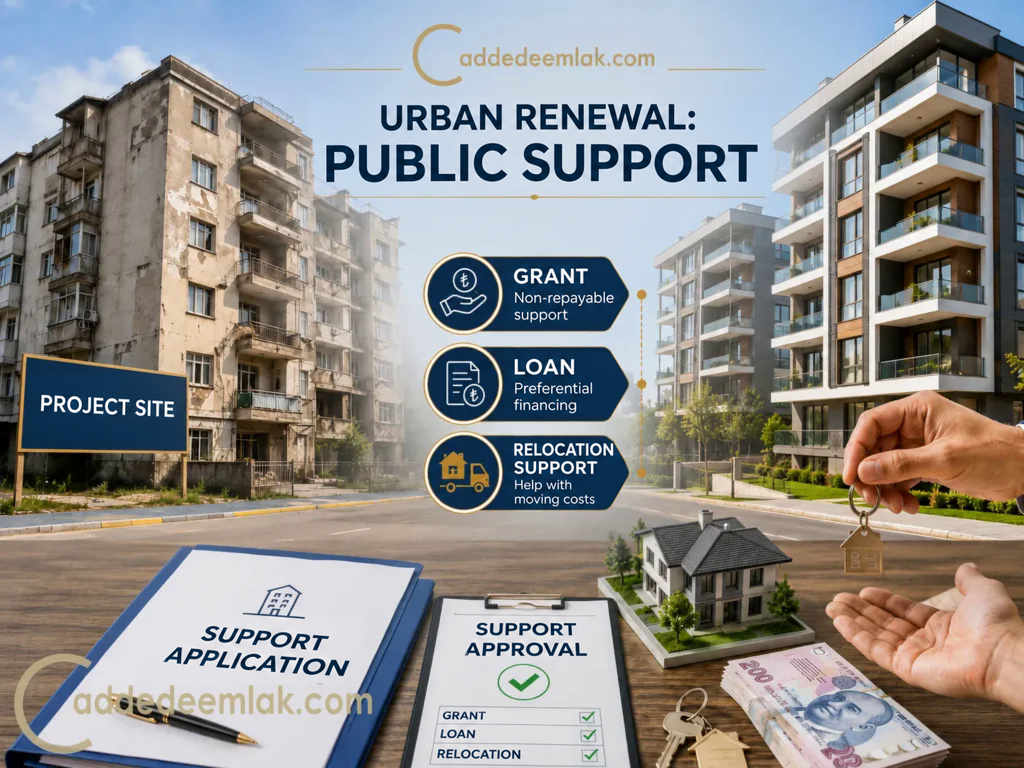
Rent assistance
Rent assistance is one option for eligible occupants who must leave because of a risk finding.
Support differs for owners, tenants and holders of limited real rights. Eligible tenants may receive a one-off payment.
Official guidance gives 18 months for qualifying owners of risky buildings outside risk areas. In designated risk or reserve areas, the authority sets the period within the applicable limit, up to 48 months.
Check these points before applying for rent assistance.
- Keep track of the application deadline.
- Document the vacating or demolition date.
- Prepare the required documents.
- Requirements can differ for owners, tenants and holders of real rights.
- Check amounts and procedures against the latest guidance.
Interest subsidies
Financing can involve construction in exchange for land shares, revenue sharing or direct borrowing.
Interest support can help eligible applicants finance rebuilding.
The same person cannot combine rent assistance and interest support under this statutory scheme.
The Istanbul directorate confirms that the two benefits cannot be combined from the special project account.
Compare the options before deciding.
- Would rent assistance help more?
- Would an interest subsidy be more suitable?
- How long will construction take?
- Is a contractor arrangement or borrowing more appropriate?
- Have you estimated household costs, rent and potential changes in value?
Tax and fee exemptions
Certain registry, notarial and municipal fees and stamp taxes may be exempt under Law No. 6306.
Exemptions depend on the transaction, building status, contract and authority’s procedure.
Review complex projects with a lawyer, tax adviser and property specialist before signing.
Tenant rights in urban renewal
Tenants may need to move once a risk decision is final. Plan the move, housing search and aid application around the notice.
Tenants should check the following.
- Whether the risk finding is final
- Vacating deadline
- Eligibility for relocation support
- Proof of occupancy and utility bills
- Lease status
- Written communication with the landlord
Eligible tenants may qualify for one-off moving support. Prepare evidence of occupancy and apply within the deadline.
A tenancy in the rebuilt property depends on applicable law, the owner, the terms and the new rent. Review any entitlement for the case.
Istanbul’s Yarısı Bizden programme
Yarısı Bizden is an Istanbul programme for qualifying projects.
Under Presidential Decision No. 11902, the deadline specified in the construction assistance rules was extended to 31 December 2027. Programme eligibility requirements still apply.
The announced package per eligible dwelling included a TRY 875,000 grant, a TRY 875,000 loan and TRY 125,000 for moving. Commercial premises have separate terms.
Check the application calendar, building status and unit conditions against official guidance.
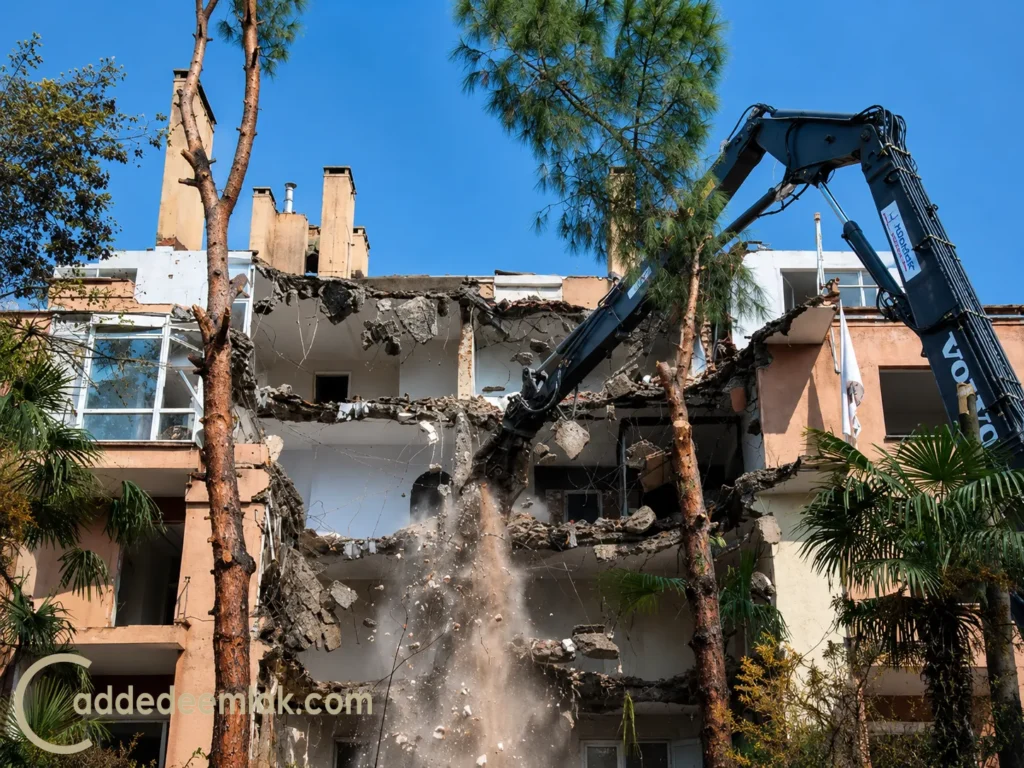
Why it matters in Kadıköy and on Bağdat Avenue
Age, structural safety, parking, lifts, shared space and architecture matter in Caddebostan, Suadiye, Erenköy, Göztepe, Feneryolu and Fenerbahçe.
There are three main local considerations.
1. Earthquake safety
Many older buildings predate newer seismic rules. Consider age, structural system and ground conditions together.
2. Home values
Well-planned buildings with parking, lifts and compliant design can attract stronger demand where new supply is limited.
3. Commercial property
Redevelopment can change ground-floor commercial space through wider frontages and modern shop layouts, affecting rents and investment potential.
Around Bağdat Avenue, a single project can also affect the appearance and commercial activity of its street.
How to choose a contractor
A capable contractor and a clear agreement help control delays, quality problems, disputes and losses.
Compare the following before selecting a contractor.
Financial capacity
Check whether the contractor can fund and complete the project on time and to specification.
Completed projects
Review completed projects, delivery times, workmanship and owner feedback.
Technical specifications
Specify concrete, reinforcement, insulation, doors and windows, lifts, parking, finishes, wet areas and shared spaces.
Delivery dates
Set written start and handover dates and define remedies for delay.
Performance security
Consider a bank guarantee, mortgage, surety or other appropriate security.
Allocation of new units
Record each owner’s unit, aspect, floor, area, parking and storage rights.
Earlier and current practices compared
Current procedures make decisions, notices, share sales and contractor selection especially important to follow.
| Topic | Earlier practice | Current approach | What it means for owners |
|---|---|---|---|
| Voting threshold | A two-thirds threshold commonly applied. | The threshold is an absolute majority by shares. | Check the ownership shares before counting votes. |
| Notice | Reaching owners could take longer. | Electronic, notarial and local notices may be used. | Monitor official notices and deadlines. |
| Share sale | Disagreement could delay projects. | Dissenting shares may be sold through the statutory procedure. | Track notice and response deadlines. |
| Contractor selection | Oral promises and incomplete agreements could cause disputes. | Specify delivery, penalties, security and construction standards. | A reviewed contract reduces the risk of losing rights. |
| Financing and support | Rent assistance and loan support were assessed separately. | Check eligibility, documents and deadlines. | Compare the benefits and the financing options. |
Common mistakes
Avoid the following common errors.
- Acting without reviewing the risk report
- Missing the objection deadline
- Comparing offers only by area or number of units
- Skipping technical specifications
- Leaving delivery dates open
- Omitting a delay clause
- Failing to obtain performance security
- Failing to compare assistance and borrowing
- Overlooking land shares and unit allocation
- Signing without legal review
- Ignoring local market value
In higher-value neighbourhoods, small contract errors can cause significant loss. Plan the legal and property aspects together.
Planning the process with specialist support
Well-managed renewal can improve safety and living conditions and support value. Poor management can bring disputes, delays and losses.
Owners should understand the report, follow voting procedure, compare support and clarify the agreement and unit rights.
Tenants should track deadlines, moving support, documentation and housing plans.
In Kadıköy and around Bağdat Avenue, each project’s conditions can materially change market value and rental prospects.
Caddede Emlak can help assess neighbourhood conditions and property value before and after renewal.
For decisions about a specific building, consult the competent authority and qualified legal, financial and technical specialists.
Frequently asked questions
How does urban renewal start?
An owner or legal representative can apply to a licensed organisation for a formal building risk assessment.
Must all owners approve the assessment?
An application by one owner or their legal representative is sufficient.
How long do owners have to object?
Owners can object within 15 days of legal notice.
What does the absolute majority rule mean?
The approving owners must represent more than half of the ownership shares.
Who qualifies for rent assistance?
Eligible owners, tenants or holders of real rights can receive the support applicable to their category.
Can I combine rent assistance and an interest subsidy?
The same person cannot receive both under this statutory scheme.
Can tenants get support?
Eligible tenants may receive a one-off payment. Check the application and evidence of occupancy.
What happens if the building is not demolished on time?
Authorities may enforce clearance, disconnect utilities and arrange administrative demolition under the applicable procedure.
Does Yarısı Bizden cover Kadıköy?
Qualifying buildings in Kadıköy can be considered because the programme applies in Istanbul.
Can renewal increase home value?
It can support demand. Actual value depends on location, design, land shares and market conditions.
Why does renewal matter in Kadıköy?
Older buildings, high property values and earthquake risk make the process especially relevant there.
What matters when choosing a contractor?
Compare finances, track record, specification, delivery dates and contractual protections.
In the heart of Bağdat Avenue, Join us for a coffee
We would be pleased to welcome you to our Suadiye office to discuss your property sale, purchase or valuation goals in person.