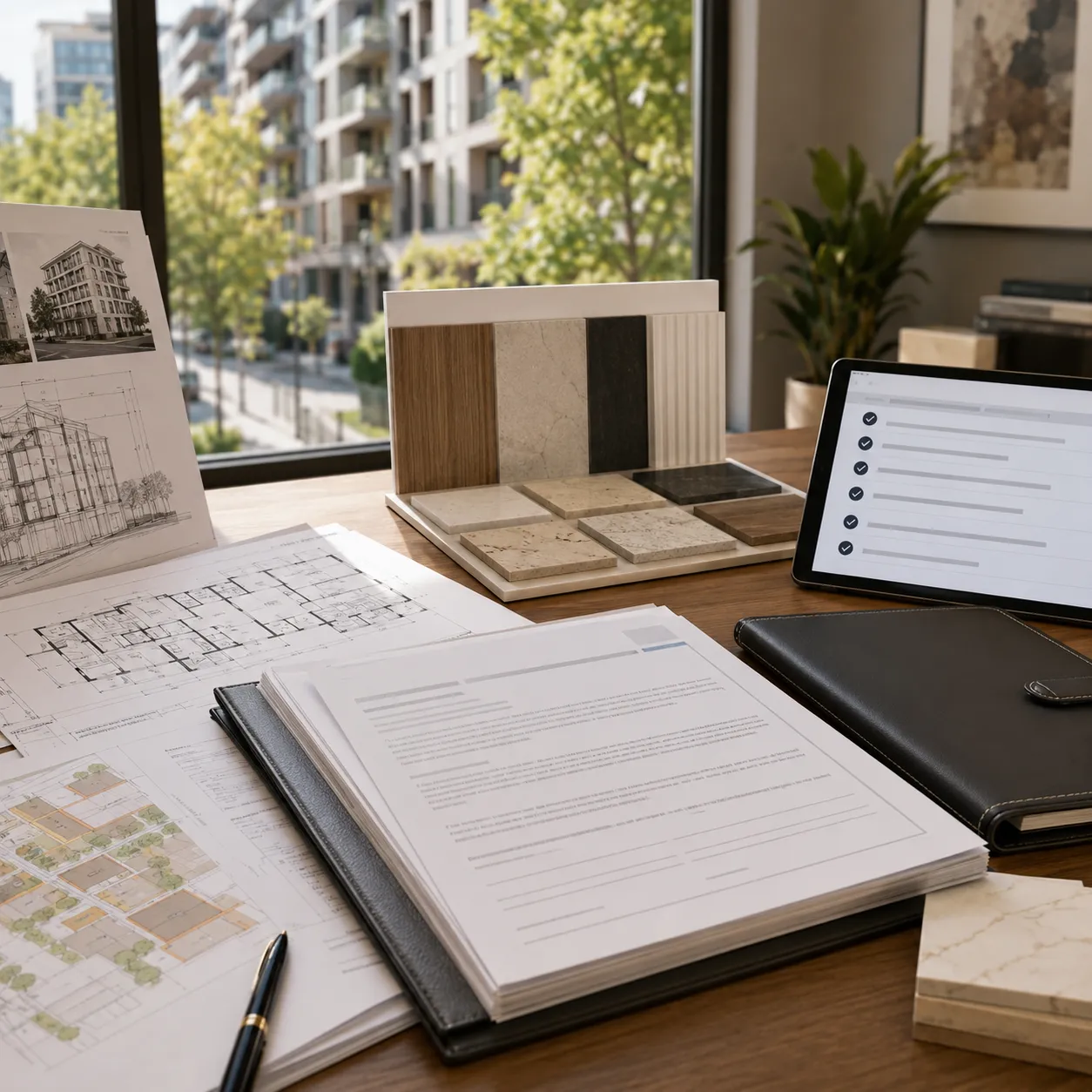

Urban Renewal Contractor Agreements in Türkiye: What to Check
Contents
The contractor agreement is central to protecting owners when an older or risky building is replaced. It sets unit allocation, deadlines, land shares, specifications, penalties, security and contractor responsibilities.
In Kadıköy, on Bağdat Avenue and in Suadiye, Erenköy, Göztepe and Caddebostan, a clause can change the area, aspect, floor, parking, storage and future price of the replacement apartment.
Compare the technical, legal and financial terms and their effect on property value alongside the share the contractor offers.
What to check in an urban renewal agreement
Before signing, review the contractor’s qualifications, allocation, land shares, timetable, technical specification and contractual protection.
Contractor qualifications
Assess the company’s technical, financial and legal capacity.
Allocation of units
Identify exactly which unit each owner will receive.
Land shares and value adjustments
Account for floor, aspect, views, area and position.
Completion deadline
Set written start and completion dates.
Delay penalty
Specify what protects owners against delayed delivery.
Technical specification
Write down materials, brands, standards and details of shared spaces.
Security and guarantees
Review guarantees against a contractor leaving work unfinished.
Legal review
Seek specialist legal and technical review before signing.
Why does the contractor agreement matter?
This contract determines the owners’ rights in the replacement building and what the contractor must deliver.
The contract should answer the following questions.
- Which owner receives which unit?
- What floor, aspect and position will it have?
- How are gross and net areas measured?
- Who gets parking, storage, balcony and terrace rights?
- When must the contractor hand over the building?
- How will owners be compensated for delays?
- Which materials are specified?
- How are owners protected if work stops?
The Urban Transformation Presidency’s rules allow relevant decisions under Law No. 6306 to be made by an absolute majority calculated by ownership shares. Check the applicable procedure, shares and offer before committing.
Before a building is officially assessed as risky
Some owners are asked to sign a letter of intent, preliminary agreement or construction agreement in exchange for land shares before a formal risk assessment.
Those documents are generally matters of private law and can create obligations. Deferring details that are absent from the agreement can lead to disputes.
Have any preliminary agreement reviewed before signing.

How to assess a contractor
Consider the contractor’s technical capacity, finances and record of delivering projects alongside the share it offers.
Check these points when comparing contractors.
- Firmanın Contractor authorisation
- Completed projects
- Work in the same area
- Financial strength
- Technical team
- Ability to finish
- Banking, security and financing arrangements
- Written commitments to owners
In valuable areas such as Kadıköy and Bağdat Avenue, the choice of contractor can affect both construction and the completed building’s long-term value. Check contractor authorisation through YAMBİS.
Write the new unit allocation into the agreement
Identify which legally separate unit each owner receives in the new project.
What to specify when allocating units
Write each unit’s attributes and associated rights into the agreement.
Unit numbers
Record the number of each owner’s apartment.
Floor, aspect and position
Specify the floor, aspect and position in the building.
Gross and net floor area
Include both gross and net floor areas.
Balcony, terrace, storage and parking rights
Specify rights to balconies, terraces, storage and parking.
Use of common areas
Define the use of gardens, amenities, parking, storage and other shared spaces.
Cash payments or balancing contributions
Record any cash payments to owners or balancing contributions they must pay.
Value adjustments
Use value adjustments to account for differences in floor, aspect, view, location and area.
In Kadıköy, units in one building can differ considerably in value because of views, proximity to the avenue or parking. Allocation should reflect those differences.
Land shares and adjustments for unit value
Existing units may differ in size, position, aspect and value. Review the land shares and the method of equalising unit values.
Answer these questions before signing.
- Are the existing land shares accurate?
- How do registered shares compare with actual unit values?
- How will the new units be allocated?
- Will differences in floor, aspect, view and area be valued?
- How will parking, storage, shops or terraces be allocated?
- Will owners be asked to make balancing payments?
- Will any owner receive a cash payment?
An inaccurate or disproportionate land share can carry through into the replacement allocation and compound the loss.
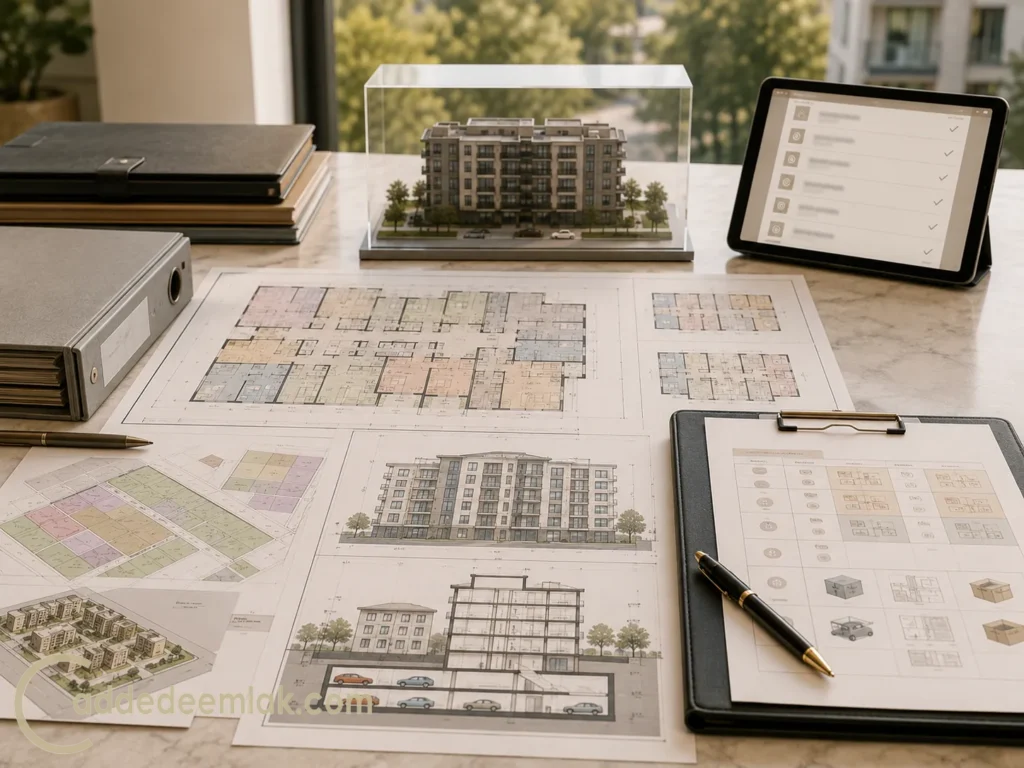
Set clear deadlines and delay penalties
Define the dates for vacating, demolition, obtaining permits, starting work and delivering the building.
Check these dates and conditions.
- Vacating date
- Demolition date
- Time allowed for permits
- Construction start
- Construction completion
- Key handover
- Rent support during delay
- Delay penalty
- Force majeure
A promise to finish within a reasonable period gives owners little certainty. State the dates, periods, payments and penalties precisely.
Make the specification part of the contract
The technical specification defines the quality of the replacement building. Incorporate it into the contract or attach it as an integral appendix.
Include these items in the technical specification.
- Concrete class and structural system
- Foundations and ground works
- External cladding
- Thermal and acoustic insulation
- Windows and frames
- Kitchen and bathroom brands
- Lift specifications
- Parking system
- Storage areas
- Finishes in common areas
- Generator, water booster and fire systems
- Security systems
Identify brands, models and performance standards where relevant. General wording such as “first-class materials” is too vague.
Specify security and performance guarantees
Set out protections if the contractor abandons work, falls behind or has financial difficulties.
Review the following safeguards.
- Bank guarantee
- Mortgage or other security
- Termination provisions
- Delay penalty
- Rent support
- Payments tied to construction milestones
- Procedure if the work is unfinished
- Contractor’s right to assign the work or bring in a partner
Use written protections that can be enforced.
What should owners do about contract disputes?
Contractor selection, unit allocation and failures to perform are often private-law matters. Address them in the agreement before signature.
Administrative procedures and the private agreement serve different purposes. Obtain legal advice on the terms and remedies before signing.
Common mistakes in contractor agreements
Small omissions can reduce owners’ entitlements or delay the project.
Relying on oral promises
Record promises in the signed agreement.
Leaving delivery dates open
Unclear start or handover dates can prolong the project and leave owners bearing the cost.
Vague technical specifications
Specify materials, brands, standards and shared areas to reduce disputes at handover.
Omitting parking and storage rights
Write parking, storage and shared-use rights into the contract.
Skipping value adjustments
Compare floor, aspect, views, area and location when allocating apartments.
Overlooking land shares
Review existing shares so the agreement does not perpetuate an imbalance.
Failing to check the contractor’s finances
Check the contractor’s financing, completed projects and ability to finish.
Unclear delay penalties
Set out remedies and any penalties for late delivery.
These errors can reduce the finished building’s value and jeopardise owners’ entitlements.
Why details matter in Kadıköy and on Bağdat Avenue
High land values in Kadıköy, on Bağdat Avenue and in Suadiye, Erenköy, Caddebostan and Göztepe make these terms especially important.
Floor, aspect, street, parking, amenities, distance from the avenue and architectural quality can all materially affect the value of a replacement unit.
For an older building, review land shares, planning status, unit allocation and value adjustments together.
Put the owners’ rights in writing
The contractor agreement governs future ownership rights, unit value, deadlines, technical quality and the financial outcome of redevelopment.
Review planning status, land shares, plans, specifications, value adjustments and contractor qualifications together before signing.
Caddede Emlak considers the full agreement, neighbourhood conditions, land value and owners’ long-term rights alongside the proposed allocation.
Seek qualified legal, technical and valuation advice about the particular building, contract and owners’ decisions.
Frequently asked questions
Why does the contractor agreement matter in urban renewal?
The agreement defines which unit each owner receives, when it is due, what quality is required and what remedies apply.
What should owners review before signing?
Check the contractor, land shares, unit allocation, value adjustments, specifications, deadlines, delay provisions and security.
Should the technical specification be attached?
Yes. Put requirements for materials, brands, shared areas, parking, lifts, insulation and security in the specification.
Should the agreement include a delay penalty?
Set out how owners will be protected if delivery is late, including any rent support and contractual penalty.
Do land shares affect the agreement?
Land shares can affect entitlements, unit allocation and value adjustments. Check them before signing.
How can owners protect themselves if work stops?
Define security, bank guarantees, termination, contractual penalties and arrangements to finish the project.
Should a lawyer review the agreement?
An experienced lawyer and, where possible, a technical adviser should review it because it carries legal and financial consequences.
In the heart of Bağdat Avenue, Join us for a coffee
We would be pleased to welcome you to our Suadiye office to discuss your property sale, purchase or valuation goals in person.