
How to Assess a New Building in Türkiye: 12 Buyer Checks
Contents
A new apartment can look impressive with marble, a smart lobby, a modern kitchen, concealed lighting and built-in appliances. To assess the quality of a new building, look at the systems and workmanship behind those finishes.
Review the structure, waterproofing, insulation, window installation, services, garage and shared areas together.
Around Kadıköy, Bağdat Avenue, Suadiye, Caddebostan, Erenköy and Göztepe, these checks can materially affect a purchase decision.
At a glance: 12 checks for a new building
Assess the building’s technical features alongside its age, architecture and interior. The following points cover the structure, insulation, services and occupancy documents.
Structure and approved plans
Have the reinforced-concrete structure, column and shear-wall arrangement, and compliance with approved structural and architectural plans reviewed.
Contractor and inspection history
Investigate the contractor’s completed projects, workmanship and the building’s inspection history where records are available.
Ground and foundations
Review the ground investigation, foundation design and whether the structure was designed for the actual site conditions.
Façades and water management
Check façades, roofs, terraces, balconies and rainwater drainage for signs of water entry and defective details.
Thermal and acoustic insulation
Thermal insulation and acoustic separation between apartments, floors and service shafts both affect comfort.
Windows and frames
Assess window profiles, glazing, seals and installation for thermal, acoustic and weather performance.
Internal workmanship
Joints in flooring, tiles, paintwork, doors, kitchen units and fixed furniture can reveal the standard of finishing.
Electrical and mechanical services
Review electrical provision, socket locations, the consumer unit, heating, cooling, water supply and drainage against the intended use.
Bathrooms and wet areas
Falls, drains, sealant, grout and the waterproofing system in bathrooms affect the risk of damp and leaks.
Covered parking and basements
Check parking rights, vehicle access, ventilation, drainage and signs of damp or water in basements.
Lift and shared areas
Review lift capacity, the entrance, stairs, escape routes and shared spaces for practical use and the relevant technical requirements.
Occupancy, energy and technical documents
Check the occupancy permit, Energy Performance Certificate and technical documents against the property records.
How to assess the systems and finishes of a new building
Buyers often notice kitchen units, floors, tiles, doors and bathroom fittings first.
Many of these finishes can be replaced later.
The elements that can be harder or more expensive to alter include:
- Structural system
- Ground and foundation design
- Waterproofing
- Thermal and acoustic insulation
- Façade system
- Window installation
- Mechanical services
- Garage and shared-area infrastructure
Start with the structural and technical elements that are difficult to change, then assess decorative finishes.
1. Have the structural system assessed
A building’s seismic performance requires engineering assessment based on its records and condition.
The Turkish Building Earthquake Code sets engineering principles for design under earthquake effects, including ground and foundation design.
Ask these questions:
- When was the building permit issued?
- Are structural plans available?
- Which inspection organisation was responsible?
- Is the ground investigation available?
- Have changes been made outside the approved project?
Have concerns about the structural system assessed by a civil or structural engineer.
2. Review the contractor's completed projects
Review the property records alongside information supplied by the sales office or listing.
Check the contractor’s:
- Previously completed projects
- How those buildings perform after several years
- Façade problems
- Damp in garages and basements
- How common areas have aged
- Technical issues reported to management
Use completed projects and records to support the comparison.
Check available contractor registration services on e-Devlet for authorisation and classification information.
If possible, visit a building the firm completed three to five years ago. Several seasons of use may reveal maintenance and workmanship issues that are less apparent at handover.
3. Ask for ground and foundation records
Ask for technical records to support general claims about good ground conditions.
Ground investigations consider soil, groundwater, the proposed structure and neighbouring conditions. The Ministry’s ground and foundation investigation rules require technical reporting.
Check that the relevant project documents are available for professional review.
4. Check the façade details
Review the technical details behind the façade as well as its appearance.
Look at:
- Cladding joints
- Window surrounds
- Balcony edges
- Window sills
- Rainwater outlets
- Façade cracks
- Sealant and junction details
Record any visible concerns for review.
Water marks around windows or balcony junctions after rainfall can warrant investigation of the construction detail.
If possible, view the building after rain as well as on a dry day.
5. Review thermal and acoustic performance
Check acoustic performance separately from thermal insulation.
Wall build-ups, floor details, windows, service shafts and junctions between units can affect sound transmission.
The revised TS 825 thermal-insulation requirements took effect on 1 April 2025. Have the requirements applicable to the particular project checked.
During a viewing:
- Close the windows and listen to outside noise.
- Check noise from the corridor.
- Consider the lift's proximity to the apartment.
- Look at service shafts near bedrooms.
- If possible, revisit when the building is occupied.
An empty building may give a different impression of noise from one that is occupied.
6. Check window installation
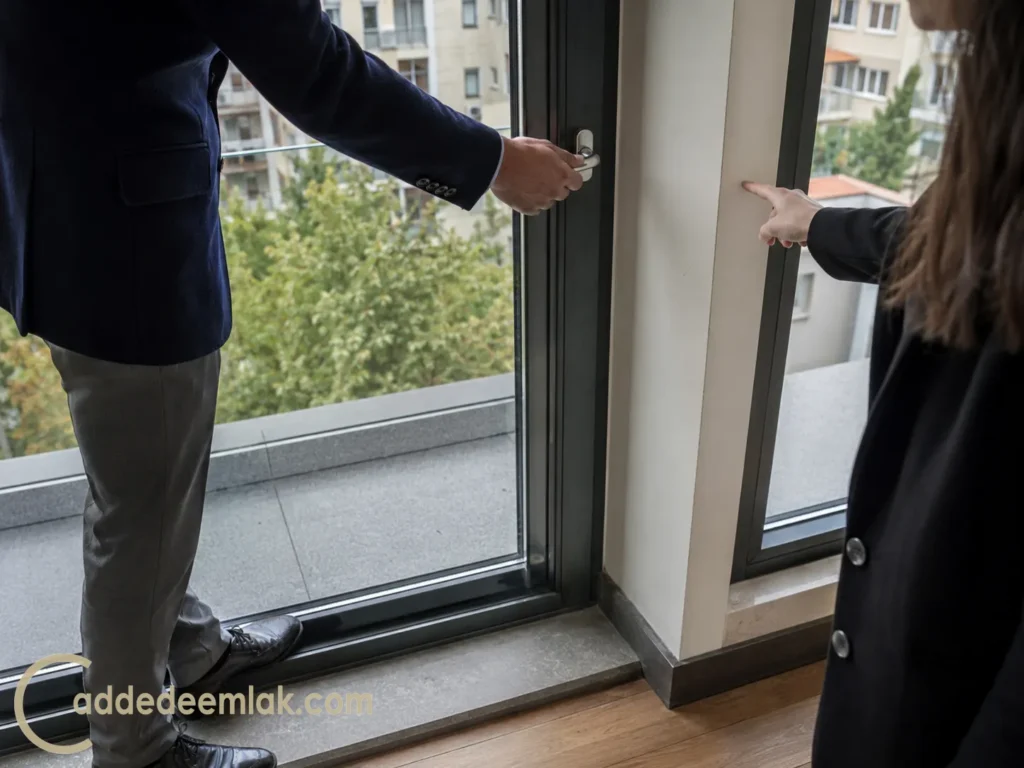
Assess the complete window system alongside its brand.
Glazing, frames, seals, fittings and installation work together.
Check:
- Do windows open and close easily?
- Do opening panels fit their frames?
- Are there gaps when closed?
- Are there cracks or defective sealant around windows?
- Are balcony-door thresholds and drainage properly detailed?
Test normal operation and look for visible defects.
Installation quality can affect the performance of even an expensive window system.
7. Look for workmanship issues
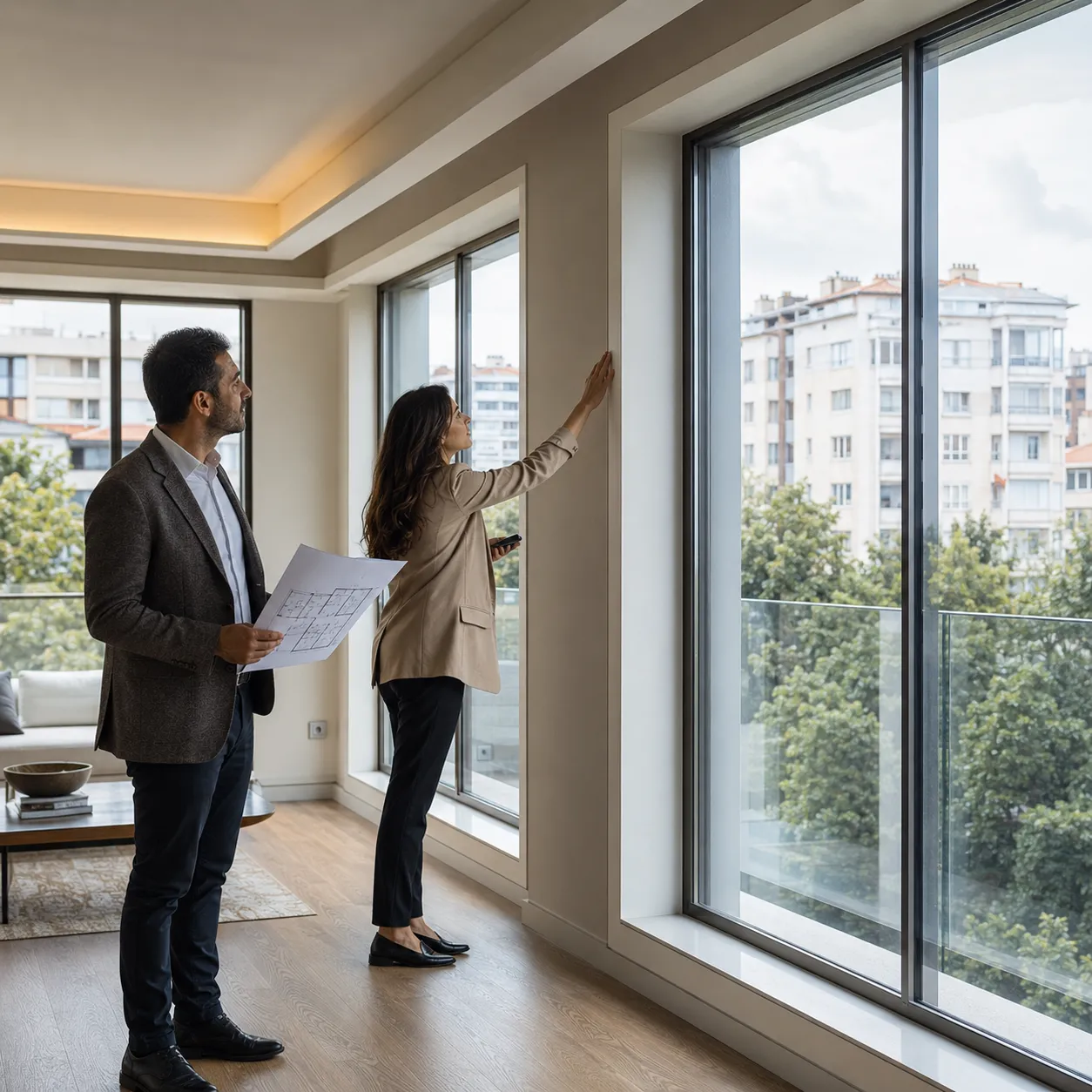
A careful walk-through can reveal useful details about workmanship.
Look particularly at:
- Wall and ceiling junctions
- Skirtings
- Flooring joints
- Door frames
- Tile grout
- Kitchen cupboard doors
- Worktop joints
- Alignment of sockets and switches
Record issues and ask how they will be addressed.
A minor defect alone may be routine snagging. Repeated gaps, misalignment and poorly finished joints can warrant a more thorough inspection.
8. Review electrical and mechanical services
Building services can be expensive and difficult to alter.
Check these items:
- Water pressure
- Time for hot water to arrive
- Sink and shower drainage
- Drain odours
- Air-conditioning condensate drainage
- Heating system
- Access to distribution manifolds
- Arrangement of the electrical panel
Ask for the relevant records and a specialist inspection where needed.
Have qualified professionals investigate suspected electrical or mechanical problems.
9. Inspect bathroom drainage and waterproofing
With a new bathroom, review water management alongside the tiles and fittings.
Observe whether shower water:
- Flows toward the drain
- Reaches the doorway
- Collects in corners
Use ordinary operation to identify drainage concerns.
Poor falls can cause persistent pooling.
Leakage to the floor below can be more serious. Check the falls and waterproofing details with the relevant professional.
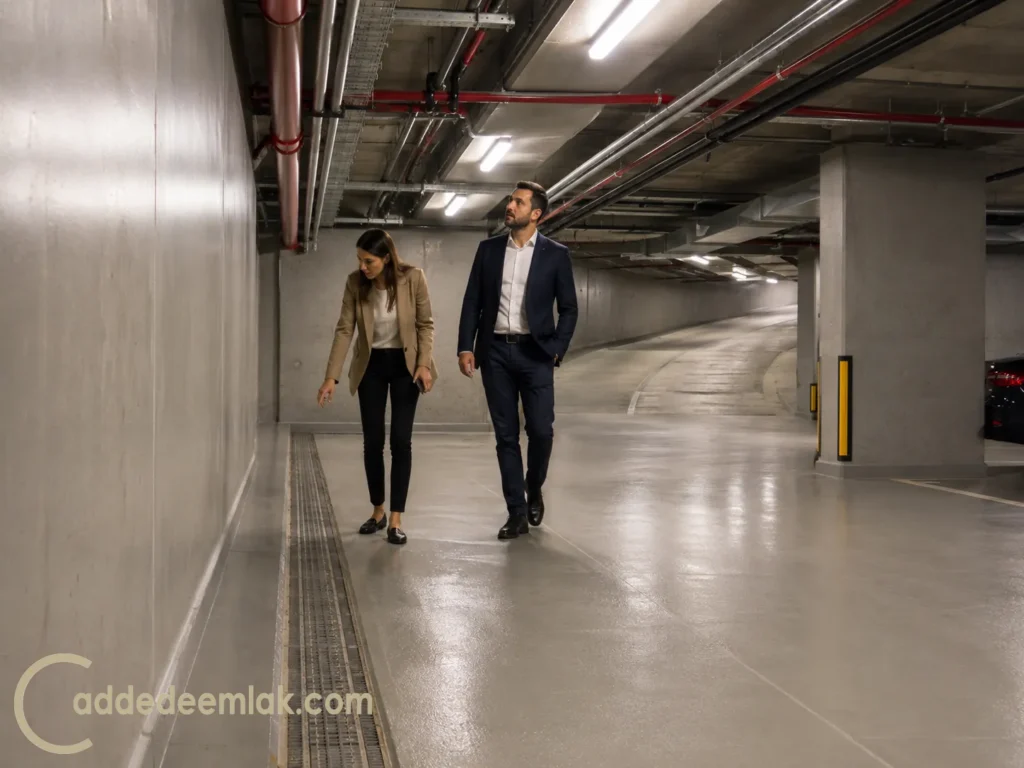
10. Include the garage and basement
Include covered parking and basement levels in the inspection.
Basements may make damp, drainage and services easier to observe than a decorated apartment or lobby.
Look for:
- Damp on walls and ceilings
- White salt deposits
- Water marks
- Column and wall bases
- Garage-ramp drainage
- Pipework arrangement
- Cable routes
- General workmanship
Ask about any history of damp, including where basement walls have recently been repainted.
11. Assess the shared areas
Include shared areas when assessing the purchase and likely running costs.
Lifts, lobbies, stairs, parking, the entrance, landscaping and service spaces are shared by owners.
Poorly executed shared areas can lead to:
- More maintenance
- Higher shared expenses
- Faster deterioration
- Reduced appeal of the building
Consider those effects in the maintenance assessment.
Assess the apartment and the shared building together.
12. Review occupancy and energy documents
Complete the viewing with a review of the technical documents.
Ask for:
- Building permit
- Occupancy permit
- Condominium ownership status
- Energy Performance Certificate
- Compliance of actual use with approved plans
Compare them with the actual property.
An Energy Performance Certificate records information on energy demand, efficiency class, insulation and heating and cooling performance. Check the certificate and the requirements applying to the occupancy process.
Review condominium ownership, construction servitude and occupancy approval alongside the registered legal status of the unit.
Assess the building behind its finishes
Assess expensive appliances, imported tiles and natural stone as part of the fit-out.
A building with simpler finishes may perform well if engineering, insulation, services and workmanship are sound.
A practical order for the review is:
Structure → water and thermal insulation → services → façades and windows → shared areas → internal workmanship → decorative finishes
The systems behind the decoration largely determine how the building performs.
A 15-minute first-viewing checklist
During a first viewing, use this approximately 15-minute check to note usability and potential issues for further investigation.
Open and close windows
Open and close the windows normally, checking for friction, difficulty or poor alignment.
Check water pressure
With permission, run kitchen and bathroom taps to observe water pressure, including when more than one tap is used.
Observe sink and shower drainage
Observe how quickly sinks and showers drain. Slow flow or pooling may require investigation.
Check the doors
Open and close internal and entrance doors to check alignment and normal operation.
Inspect flooring and skirtings
Look for swelling, gaps, uneven floors and poorly finished skirting joints.
Listen for outside noise
Close the windows and listen for traffic, nearby businesses and other outside noise, especially near a main road.
Review falls on balconies and in bathrooms
Review falls toward drainage points on balconies and in wet areas.
Use the lift
Use the lift normally to observe noise, floor levelling and access to the apartment’s floor.
Visit the garage and basement
Visit the garage, ramp and basement. Look for damp, water marks, odours and practical access issues.
View the façade from outside
Look at the façade, balconies, cladding and common areas from outside.
Ask for technical documents
Ask for occupancy and title records, the building permit, specification and equipment warranties. Combine the viewing with legal and technical checks.
Buying a new apartment around Kadıköy and Bağdat Avenue
Where new apartments command high prices around Bağdat Avenue, differences in performance and workmanship can matter to the buyer.
Two new buildings on one street may look similar but differ in:
- Parking arrangements
- Actual usable area
- Façade quality
- Acoustic performance
- Window system
- Shared spaces
- Workmanship
- Contractor's completed projects
Compare the details behind those features.
When comparing prices, assess the actual apartment and building characteristics. Our Kadıköy apartment value guide sets out a broader comparison.
Use the details and documents to assess quality
Building quality needs several kinds of evidence.
Look for appropriate engineering, effective insulation, sound services, well-resolved façade details and careful workmanship.
When buying a new apartment, assess:
Documents + engineering + building details + workmanship + the contractor’s completed projects
Read that evidence together.
Caddede Emlak recommends reviewing technical features, parking, shared spaces, actual usable area and longer-term performance alongside interior decoration.
Note: This guide provides general information. Before buying, obtain advice from qualified engineers on structural performance, ground conditions, electrical and mechanical systems, waterproofing or other technical concerns.
Frequently asked questions :
How do you assess a new building’s quality?
Review structural records, insulation, façades, windows, services, parking, shared areas and internal workmanship together.
Does a new building’s age establish its seismic performance?
The applicable code governs its design, but assessing a particular building needs engineering review of records and condition.
Is the occupancy permit important for a new apartment?
It is a key document in completion and permitted use. Check title status and compliance with approved plans as well.
How can I check the contractor?
Review earlier completed buildings and the available authorisation and classification records through official services.
Do expensive finishes establish the building’s quality?
Evaluate engineering, insulation, services and installation alongside the fit-out.
Why inspect covered parking?
Garages and basements can reveal damp, drainage, services and workmanship that should be reviewed.
In the heart of Bağdat Avenue, Join us for a coffee
We would be pleased to welcome you to our Suadiye office to discuss your property sale, purchase or valuation goals in person.